
 VitalHeart Editorial Team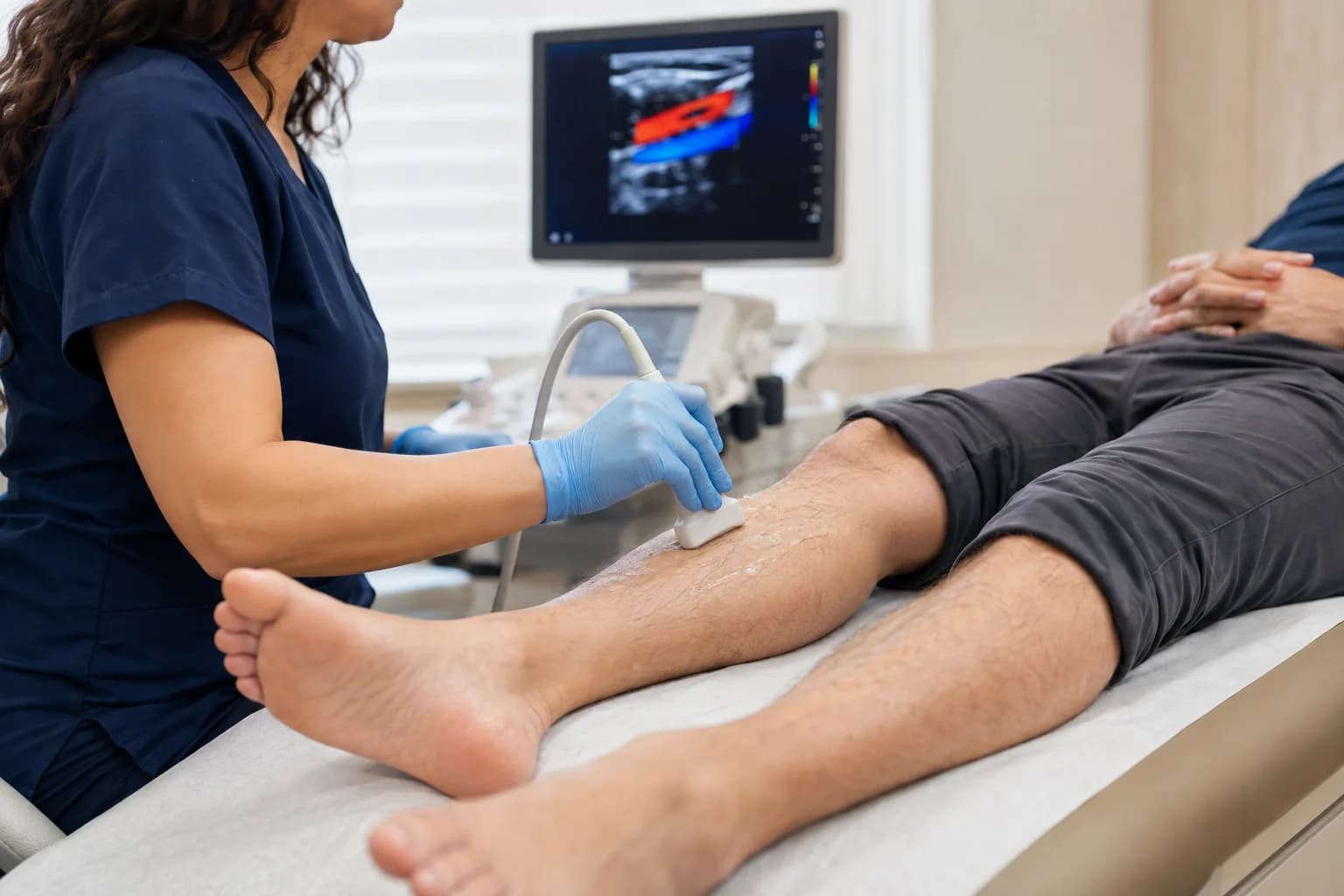
Introduction
The circulatory system relies on two connected networks. Arteries carry blood away from the heart to the body, while veins return blood toward the heart. Problems in either network can affect the legs, but the questions asked during an arterial evaluation are different from those asked during a venous evaluation.
Arteries And Veins Have Different Jobs
Leg arteries deliver oxygen-rich blood to muscles and tissues. Narrowing or blockage can reduce that supply. Leg veins work against gravity with help from valves and muscle movement. Venous problems can involve impaired return flow or blood clots. Similar symptoms can have different causes, so symptoms alone cannot identify which system is involved.
What Doppler Ultrasound Adds
Standard ultrasound creates images from reflected sound waves. Doppler ultrasound analyzes changes in those waves to evaluate moving blood. According toRadiologyInfo.org’s vascular ultrasound overview, vascular ultrasound can help evaluate the circulatory system, identify certain blockages, and detect blood clots. The exam does not use ionizing radiation.
During a lower-extremity examination, a sonographer places gel and a transducer on selected areas of the leg. The protocol depends on whether the clinical question is arterial, venous, or both. The interpreting clinician considers vessel images, blood-flow patterns, measurements, symptoms, and history before recommending next steps.
Arterial And Venous Exams Answer Different Questions
- An arterial study may evaluate blood-flow direction and velocity or look for areas where flow appears reduced.
- A venous study may assess whether veins compress normally, how blood moves through them, and whether findings suggest a clot or valve problem.
- A screening study may be limited in scope and should not be assumed to answer every diagnostic question.
- An unclear or abnormal result may require a diagnostic examination, laboratory testing, or specialist evaluation.
Symptoms Need The Right Level Of Care
Do not wait for a routine wellness screening when symptoms could indicate an urgent problem. TheCenters for Disease Control and Preventionlists swelling, unexplained pain or tenderness, warmth, and redness or discoloration as common possible symptoms of deep vein thrombosis. Difficulty breathing, chest pain, coughing blood, fainting, or a fast or irregular heartbeat can occur with pulmonary embolism and require immediate medical attention.
Other leg concerns—such as pain with walking, a wound that is slow to heal, color change, or a foot that feels unusually cool—also deserve clinical evaluation. A healthcare professional can determine whether vascular testing or another type of assessment is appropriate.
Prepare For A Useful Conversation
- Describe when symptoms began, what makes them better or worse, and whether one or both legs are affected.
- Share relevant history such as prior blood clots, vascular procedures, smoking, diabetes, high blood pressure, or high cholesterol.
- Ask what the examination covers, who interprets it, and how quickly results will be available.
- Confirm where the report should be sent and who will coordinate follow-up.
VitalHeart Scan offers alower-extremity arterial and venous Doppler service. Review the service details and discuss medical appropriateness with your healthcare provider, especially when you have symptoms or a complex vascular history.
This article is for general education and does not replace medical advice, diagnosis, or treatment. A healthcare professional who knows your history can help you decide which tests and follow-up are appropriate.