

 VitalHeart Editorial Team
A racing heartbeat, unexplained shortness of breath, or unusual tiredness during daily activities can sometimes signal a heart problem. If these symptoms persist, a healthcare professional may recommend an echocardiogram to check how your heart is working.
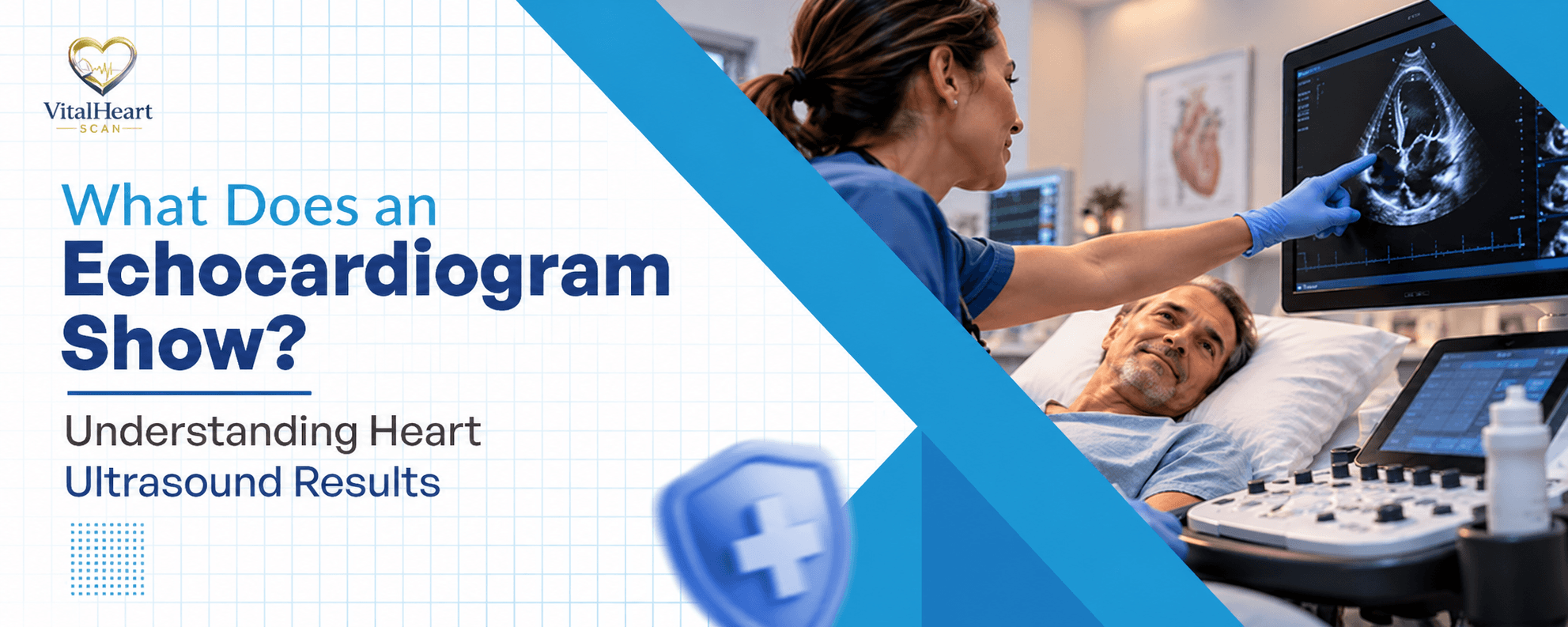
But what does an echocardiogram show? Also known as a heart ultrasound, this test uses sound waves to create moving images of your heart. It helps assess the heart's pumping strength, valve function, and overall structure.
An echocardiogram screening can also reveal changes before they cause noticeable symptoms. This makes it a useful tool for evaluating heart health.
Understanding your results can help you have more informed conversations with your healthcare professional.
This article will explain how an echocardiogram works and which heart conditions it may help identify. It will also break down common echocardiogram measurements and explain what normal and abnormal results can mean.
What Does an Echocardiogram Show?
An echocardiogram is a heart ultrasound test that shows your heart's structure and how well it works. It uses sound waves to create moving images of the heart as it beats.
These images help healthcare professionals assess the heart's function and identify changes that may need further evaluation.
An echocardiogram can show:
- Heart chambers: The size and condition of the four chambers that receive and pump blood.
- Heart walls: The thickness and movement of the heart muscle as it contracts and relaxes.
- Heart valves: Whether the valves open and close properly or allow blood to leak backward.
- Pumping strength: How effectively the heart pumps blood throughout the body.
- Blood flow: The direction and speed of blood moving through the heart and its valves.
- Structural abnormalities: Changes in the heart's shape or structure, including certain defects present from birth.
- Changes in heart function: Signs that the heart muscle or valves may not be working as expected.
How Does an Echocardiogram Work?
An echocardiogram uses sound waves to create images of your heart. A small device called a transducer sends these waves into your chest and picks up the echoes that return.
The ultrasound machine then turns these signals into moving images that show your heart in action. Here’s how an echocardiogram works:
- Sound waves enter the body: The transducer sends high-frequency sound waves through the chest toward the heart.
- Echoes return to the device: As the sound waves meet different heart structures, they bounce back to the transducer.
- Images appear on the screen: The ultrasound machine processes the returning echoes to create real-time images of the heart's chambers, walls, and valves.
- Blood flow is assessed: Doppler imaging measures the direction and speed of blood moving through the heart. This can help identify unusual flow patterns or valve problems.
Which Heart Conditions Can an Echocardiogram Help Identify?
An echocardiogram can identify changes in the heart's structure and function. The images allow healthcare professionals to examine several parts of the heart and assess abnormalities that may need further evaluation.
Some heart conditions and changes an echocardiogram screening may help identify include:
Heart Valve Problems
Heart valves control the direction of blood flow through the heart. An echocardiogram can show whether a valve is too narrow to let blood pass easily or fails to close properly, allowing blood to leak backward. These problems are known as valve stenosis and regurgitation.
Enlarged Heart Chambers or Thickened Heart Muscle
An echocardiogram can reveal whether the heart's chambers are larger than expected or the heart muscle walls are unusually thick. These changes may occur with certain heart conditions and often need to be assessed alongside other findings.
Reduced Pumping Function
The test shows how well the heart muscle contracts and pumps blood. It may show reduced pumping strength or areas of the heart muscle that don't move normally.
Congenital Heart Defects
Some people are born with structural differences in the heart. An echocardiogram can help identify certain defects, such as a hole between two heart chambers.
Fluid Around the Heart
An echocardiogram can detect fluid buildup in the sac surrounding the heart, a condition called pericardial effusion.
Which Echocardiogram Measurements Matter Most?
Echocardiogram measurements are numerical values that help healthcare professionals assess the heart's size and function. These values are key to interpreting a heart ultrasound and understanding what the images reveal about your heart health.
Several measurements provide a clearer picture of how your heart works.
Ejection Fraction (EF)
Ejection fraction measures the percentage of blood the left ventricle pumps out with each contraction. It helps assess the heart's pumping function.
A low ejection fraction may indicate reduced pumping ability, but you should consider it alongside other findings.
Heart Chamber Dimensions
These measurements show the size of the heart's four chambers. Larger or smaller chambers than expected may point to changes that need further assessment.
Their significance depends on factors such as body size and medical history.
Heart Wall Thickness
This measurement indicates how thick the heart muscle walls are. Unusually thick walls can sometimes be associated with high blood pressure or other heart conditions.
Valve Measurements
These measurements help assess how well the valves open and close. Cardiovascular screening measures blood flow through the valves and can reveal unusual flow patterns or pressure differences.
What Do Normal and Abnormal Echocardiogram Results Mean?
Abnormal echocardiogram results may reveal issues such as an enlarged heart chamber, weakened pumping action, or a valve that does not open or close properly.
The following are some common findings of echocardiogram results:
- Normal heart function: The heart's chambers, valves, and pumping action appear normal, with no significant issues detected in the areas examined.
- Unusual chamber dimensions: One or more heart chambers may be larger than expected, which can sometimes signal an underlying problem.
- Reduced pumping function: The heart may pump less blood with each beat than expected, reflected in measurements such as ejection fraction.
- Valve abnormalities: A valve may be too narrow or may not close properly, allowing blood to leak backward.
- Other structural changes: The scan may show thickened heart muscle or fluid around the heart, which may need further evaluation.
What Happens During an Echocardiogram Screening?
An echocardiogram screening usually involves lying on an examination table while a technician takes ultrasound images of your heart through your chest. The process is painless for most people and requires no needles or incisions.
Here’s what to expect during an echocardiogram for heart health screening:
- Getting ready: You may need to remove clothing from your upper body and wear a gown. The technician will explain the procedure before starting.
- Applying the gel: The technician places a small amount of gel on your chest to help the ultrasound device capture clear images.
- Taking the images: The technician moves a handheld device called a transducer across different areas of your chest to view your heart from several angles.
- Changing positions: You may be asked to lie on your side or briefly hold your breath to help capture clearer images.
- Completing the scan: Once enough images have been collected, the gel is wiped off, and you can get dressed and return to your usual activities.
What Should You Do After Receiving Your Echocardiogram Results?
Once you receive your echocardiogram results, review them with the healthcare professional responsible for interpreting your scan. They can explain what the findings mean and whether you need any further evaluation.
Your next steps will depend on the results and your overall health. Here’s what to keep in mind:
- Discuss the findings: Ask your healthcare professional about any measurements or terms in the report that you don't understand.
- Follow the recommended plan: Depending on the findings, you may need periodic monitoring, additional tests, or an appointment with a heart specialist.
- Don't ignore symptoms: A normal scan doesn't rule out every heart problem. Seek medical advice if you develop new symptoms or continue to experience concerns.
- Consider your heart health: A heart ultrasound for cardiovascular health is most useful when considered alongside your medical history and other risk factors.
Understand Your Echocardiogram Results with Vital Heart Scan
So, what does an echocardiogram show? It provides a closer look at your heart's structure, pumping strength, valves, and blood flow.
However, individual measurements and unusual findings need to be interpreted in the context of your overall health.
At Vital Heart Scan, we provide preventive echocardiogram screening to identify abnormalities in your heart health.
These findings can help you better understand your heart health and discuss any concerns with your healthcare professional. Regular screening may also help identify certain changes before they cause noticeable symptoms.
Explore our echocardiogram screening process and take a proactive step towards your overall health.
FAQs
1. Can an echocardiogram detect blocked arteries?
A typical echocardiogram cannot directly visualize blockages in the coronary arteries. However, it may show abnormalities in heart muscle movement resulting from reduced blood supply. Other tests may be required to look for blocked arteries.
2. What does a normal echocardiogram result look like?
A normal echocardiogram generally shows heart chambers of expected size, valves that function properly, and normal pumping action. Blood flow and other measurements also fall within expected ranges. Your healthcare professional will interpret the findings in context.
3. What does a low ejection fraction mean on an echocardiogram?
Low ejection fraction means that the main pumping chamber of the heart pushes out less blood with each beat than it should. It may be a sign of impaired pumping function. Your healthcare provider can tell you the reason and if further tests are required.
4. How long does it take to get echocardiogram results?
An echocardiogram report may be available the same day or within a few days, depending on the provider. A healthcare professional needs to review the images before finalizing the results. Ask your provider when your report will be ready.
5. Can an echocardiogram detect heart problems without symptoms?
Yes, an echocardiogram may reveal structural changes, valve problems, or reduced pumping function before symptoms appear. However, it cannot detect every heart condition. Whether screening is appropriate depends on your health, risk factors, and your healthcare professional's advice.